The Ginger Arms Ordering System
Case Study
Context
The Ginger Arms is a small home bar project.
As the space evolved, I built a lightweight ordering system; not as a technical exercise, but to improve flow, reduce friction while hosting, and create a more intentional guest experience.
The goal wasn’t scale.
It was clarity.
The system needed to feel like a real venue experience, without introducing complexity or ongoing maintenance overhead.
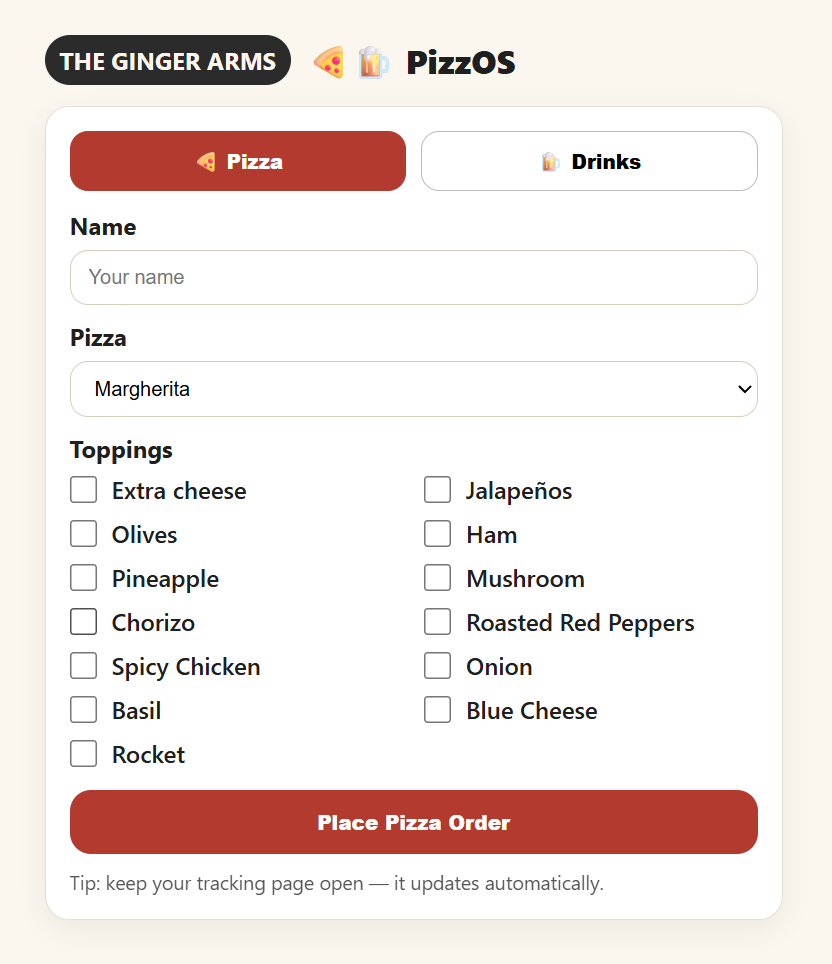
Guest-facing ordering interface — designed to reduce friction while hosting.
The Problem
As the menu expanded and the space matured, the informal approach to ordering began to strain.
- Orders were easy to mishear or forget during conversation
- Explaining menu options repeatedly slowed hosting
- Availability and specials weren’t always visible
- The experience felt less polished than the space itself
The challenge was to introduce consistency and clarity — without making the experience transactional or over-engineered.
The Approach
I treated it as a small product with real operational constraints.
Product & UX
- Designed a simple, linear journey: browse → customise → confirm
- Ensured first-time users required no explanation
- Prioritised speed and clarity over feature depth
- Designed the experience to support hosting, not replace it
Engineering & Delivery
- Created a single source of truth for menus, modifiers, and availability
- Built the system to fail safely, with manual fallback always possible
- Kept the architecture intentionally lightweight
- Prioritised low operational overhead and easy deployment
- Chose reliability over scale
Features were introduced incrementally, validated in real use rather than speculative design.
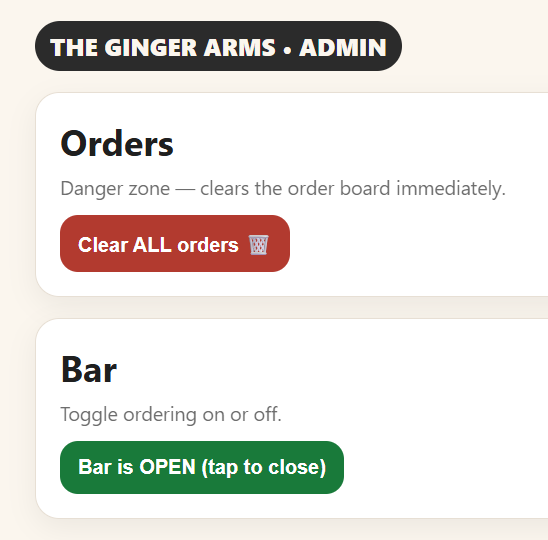
Admin controls for managing orders and bar availability during service.
The Outcome
The system improved both sides of the experience.
- Guests found ordering clearer and more engaging
- Hosting became less interrupt-driven and easier to manage
- Menu updates and specials were simple to maintain
- The overall experience felt more intentional and venue-like
Most importantly, the system required minimal attention once established.
It supported the experience without becoming the focus of it.
Key Takeaways
- Product thinking applies at any scale
- UX and reliability matter more than feature volume
- Lightweight systems often deliver disproportionate return
- Delivery decisions should reflect real-world usage constraints
Small systems deserve the same design discipline as large ones.